Thursday, February 1, 2018

February 2018


January got off to a roaring start with the S&P 500 making record highs closing up 5.6% on the month.  Suddenly on Friday February 2, we saw the DJIA plunge 666.75 points in a session. The biggest one-day plunge since the June 2016 Brexit vote when the U.K. decided to leave the European Union. As Mark Twain famously said," history doesn't repeat itself but it often rhymes."
From the bottom of 666.69 on the SPX in March 2009. the stock market has rallied over 9 years to the January 2018 highs of 2872.87. Quite an amazing run from the panic lows of the Great Recession. On Feb 2, the U.S. ten year note yield reached 2.84% up from the 2.4% year end of 2017 and up 39 basis points over the past one year. The one-year T Bill yield is 1.87%, two years note 2.14% and thirty-year bond yield 3.09%. Notice that the 2 year ten-year spread has widened to 60 basis points which some view as a healthy sign for the economy. Spreads in high yield junk bonds hover about 350 basis points over same maturity U.S. Treasuries which is nowhere near attractive or "normalized."
So why did investors pour $100 billion into equity funds in January, the biggest monthly flow ever, according to fund tracker EPFR Global?
Friday's better than forecast jobs report saw wage growth accelerate to 2.9% year over year. Unemployment is now 4.1 %, Q 4 GDP was estimated at 2.6%.
Given last week's drop in the SPX, stocks are still up 3% after a rise of about 20% in 2017. We have not seen a 5% correction in over a year.
Earnings season is in full swing has 75% plus companies exceeding estimates and forecasting more growth ahead given the new 21% corporate tax rate.

Big Questions in Investors' Minds:
Will rates continue to rise?
Will stocks fall harder from these levels?
Are my investments safe?
Do I own the right mix of stocks, bonds, alternatives and cash
to weather any storm?

People poured money into stocks this year. They became very positive as measured by record levels of optimism recorded by Investors Intelligence, 66% Bulls and only 12.6% Bears. These levels have not been seen in 32 years.
Rates continue to rise with Fed Funds now expected to climb by 25 basis points perhaps four times this year for a total rise of 1.00%. Many experts forecast 3.00% to 3.5% for the ten-year U.S. note by year end. Bill Gross says we have entered a Bear market in bonds. Jeff Gundlach forecasts a 6% ten-year treasury yield a few years down the road.
Rates in Europe are rising as most economies in the EU improve while Quantitative Easing dwindles in Europe and ends in the U.S. Japan's QE policy continues unabated.
Stocks fear a spike in long term rates but gradually rising rates signal a growing economy. With that comes higher earnings.
Markets have gone for a record number of months with no 5-10% pullbacks, which cannot continue. A 5% correction which in past times we saw on average three times per year would bring the SPX to 2729. A 10% drop calculates to 2586. Again, the index peaked recently at 2873. 
Given record low level of volatility in 2017 which led to investor complacency, I would anticipate more 5 % plus drops in this new year.
A modest correction would reset the pervasive bullishness and give pause to the "melt up" crowd's predictions. It is time to take the market's temperature.
Trees do not grow to the sky, but there are positive earnings ahead with a rising economy and lower tax rates. S&P 500 estimates will go from $132 in 2017, to perhaps $153 in 2018 with rising margins. Preliminary estimates for 2019 are up to $165.
Fact Set has an 18x forward P/E on the market, well above the 15x five-year average. Earnings and revenues have come in above average for Q4-17.  Fact Set expects earnings growth of 13.4 % year over year. Double digit earnings growth should continue in 2018 at rates of 14.2 %-19.8% in each quarter of this year.
Risks for markets include an exogenous shock from abroad, a policy error by the FED which has a new Chairman and five new voting members. Finally, concern over a political crisis at home could upset this apple cart.

We believe it is time to review your long and short-term investment objectives to ensure your portfolio is in balance with your current needs and goals.


Communication is for informational purposes only & doesn't constitute offer to sell or a solicitation of an offer to purchase any interest in any investment vehicles managed by CFA or an associated person or entity. CFA does not accept any responsibility or liability arising from the use of this communication. No representation is being made that the information presented is accurate, current, or complete, and such information is always subject to change without notice. We do not provide legal, accounting or tax advice. Any statement regarding legal, accounting or tax matters was written about the explanation of the matters described herein & not intended or written to be relied upon by any person as definitive advice. Any discussion of U.S. tax matters contained within this communication is not intended to be used and cannot be used for avoiding penalties that may be imposed under applicable Federal, state or local tax law or recommending to another party any transaction or matter addressed.

Monday, January 1, 2018

January 2018


In 2017, stock prices across the globe added more than
$9 trillion of market value. The S&P 500 finished 2017 at 2673, up 19.4%.
The S&P Global Broad Market Index gained 22%. U.S. 10 year Treasuries finished at 2.41% while
they began the year at 2.44%. Stocks rallied on earning increases, low interest
rates and an historic tax bill lowering rates for individuals and corporations.
Corporate tax rates go down from as much as 35%, one of the highest in the world, to 21%,
more in line with global competitors. Top rates for individuals go down from 39.6% to 37% and as low as 10% for low income earners. According to FactSet, the S&P 500 index calendar year
earnings growth was 9.6%, the highest annual growth since 2011. All eleven sectors are projected to report year-over-year growth in earnings; led by the Energy, Materials, and Information Technology.
Even as the Fed announced an unwinding of their expansive QE policy, stocks continued to rally.
With new leadership in place for 2018, Jay Powell, the recently appointed Fed Chairman is expected to raise the funds rate by 0.25% at least three times this year. The 5 year U.S. Treasury note at 2.44% increased in yield by 0.70% in 2017 which outpaced the 10-year note
yield now 2.44% by a considerable margin. The so-called flattening of the 2-10 yield curve,
currently +51 basis points, is closely monitored by market participants as an early indicator of future recession. Five of the last six times the 2-year treasury yield now at 1.93%, exceeded the 10 year yield the economy subsequently entered a recession. Foreign stock markets outperformed U.S. stocks as their earnings recovered and the dollar lost 14% versus the Euro, its worse year since 2003.
Emerging market stocks outpaced their developed country brethren in 2017. Despite negative headlines from North Korea, natural disasters at home and Russian collusion inquiries stocks rarely dipped more than 2%. Gold was up 13.6%.

Where do we go in 2018?
We remain in bull markets here and abroad.

Inflation, interest rates and future earnings are the keys to
further market appreciation. Fed policy is expected to hold steady.
Investors typically value stocks at 18.1x earnings when the
Consumer Price Index (CPI) stays between 0 and 2%.
Valuations normally drop as consumer prices rise beyond this level.
Central bank's in Europe, Japan and the U.S.  target 2% inflation
which they have struggled to achieve since the Great Recession in 2008.
With a +2-4% average CPI we have historically seen the 17.7 P/E multiple,
moving down to 14.7 P/E with a +4-6% CPI range.
The salient point is that unless we have much higher inflation the market
P/E multiple should hold in the current range barring a recession.
Bond investments appear to be more vulnerable than stocks in a rising inflation and rising GDP scenario. Earnings will continue to climb as GDP pushes above 3% and inflation gradually exceeds the 2%. We remain in a synchronistic global recovery despite concerns about trade wars.
The U.S. has taken a more aggressive foreign policy stance toward Israel, Iran and North Korea. ISIS has been defeated in Iraq. Saudi Arabia has a new leader challenging the old order. The EU will soon taper their QE monetary expansion following the U.S. Japan continues her QE policy at full tilt
as Adenomas is working in the land of the rising sun.
U.S. GDP and wage growth will be spurred by lower taxes, less regulation and increased capital spending, which increases productivity.
Lower unemployment levels have yet to push up wage inflation but as we dip below 4% this may change. After the tax reform bill was signed, many corporations  announced employee bonuses and wage hikes. Repatriation of $2-4$ trillion in overseas cash will lead to more capital spending, buybacks and higher dividends. 
Due to an accounting system that only Washington D.C. could create this repatriated cash counts as an addition to our deficit, as measured by the Congressional Budget Office. In fact, the cash coming back to our shores is a net boost to tax revenues as well as banks, consumers and investors.
Lower tax rates on U.S. corporations also brings jobs and profits home helping our trade deficits.
 Given the stronger economy our Fed will have a timely opportunity to pare down their $4 trillion balance sheet. Some forecasters believe earnings for the S&P 500 index will rise
into the $152.00-$157.00 zone in 2018 and over $161.00 in 2019.
Calendar 2018 estimates are now $146.59 according to FactSet before tax reform additions.
At 2730 on the index, we derive a 17.95 forward P/E multiple and a 5.55% earnings yield on a $152.00 estimate. While the multiple is at the high end of the historic range, prices are not excessive. Bonds appear less attractive than stocks and are likely to underperform again this year. We do not foresee a recession or an inflation spike in 2018. We do see better global GDP growth, rising wages, higher earnings plus, stronger employment. In sum, the table is set for climbing stock prices not withstanding higher interest rates. Money on the margin is more likely to flow into equities, out of cash and bonds.

We wish you all a happy, healthy and prosperous 2018!

Communication is for informational purposes only & doesn't constitute offer to sell or a solicitation of an offer to purchase any interest in any investment vehicles managed by CFA or an associated person or entity. CFA does not accept any responsibility or liability arising from the use of this communication. No representation is being made that the information presented is accurate, current, or complete, and such information is always subject to change without notice. We do not provide legal, accounting or tax advice. Any statement regarding legal, accounting or tax matters was written about the explanation of the matters described herein & not intended or written to be relied upon by any person as definitive advice. Any discussion of U.S. tax matters contained within this communication is not intended to be used and cannot be used for avoiding penalties that may be imposed under applicable Federal, state or local tax law or recommending to another party any transaction or matter addressed.

Friday, December 1, 2017

December 2017


The market continues to surprise on the upside with the S&P 500 index 
rising 18.3% through November 30th.
Ten year U.S. Government bonds now yield 2.37%. Earnings estimates for the SPX are conservatively pegged at $131.36 for 2018 and will likely go higher with the soon to be passed GOP tax package, boosting profits on a new lower 20% corporate tax rate.
Q3 GDP came in at 3.3% last week. The Chicago Purchasing Managers Index rose
to 63.9 with a 50-level signaling expansion in the U.S. economy.
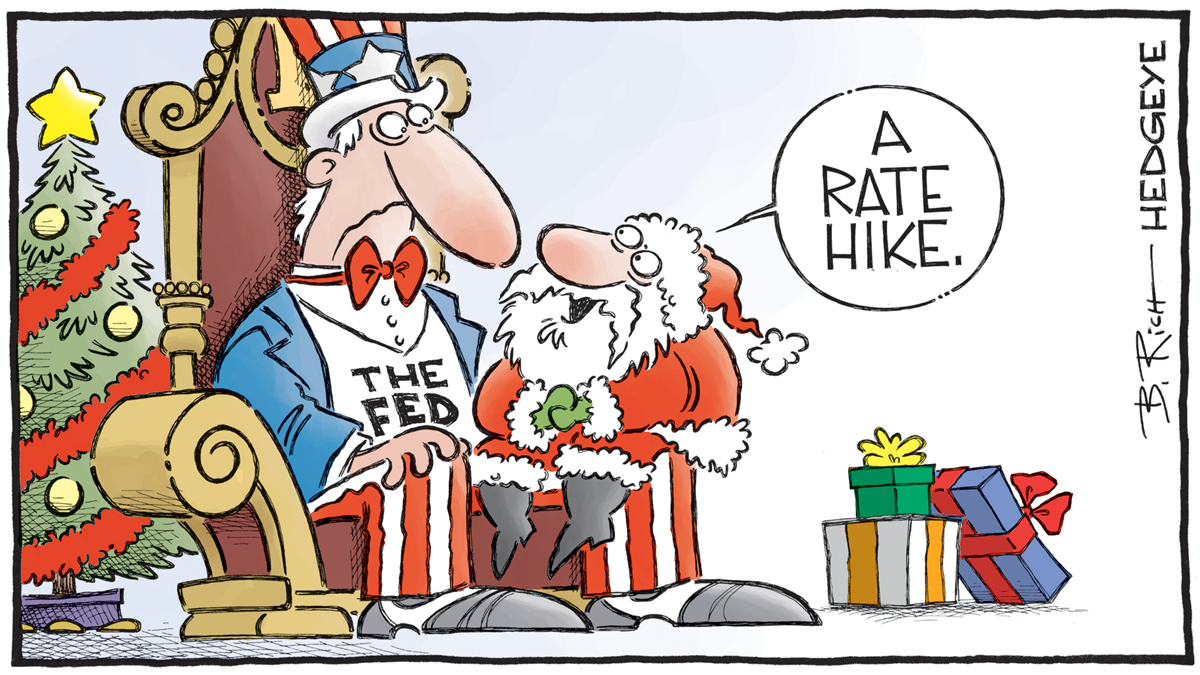
Inflation remains below the Fed target of 2% supporting the case for continued low interest rates. The Federal Reserve is expected to raise the federal funds rate by 0.25% in December and will possibly follow with 4 more similar hikes in 2018.
With an SPX close of 2642.22 we calculate an earnings/yield of 4.97% and a P/E ratio of 20.1X on a 2018 $131.36 earnings estimate. The dividend yield on the index is near 1.9% but dividends are still rising, some 10.2% in the Q3 alone.
With the imminent passage of the new tax bill in Congress expected by Christmas, earnings estimates will rise again, up to as much as $151.00 according to
UBS Wealth Management. This leaves us at a very reasonable P/E of 17.5x with an earnings yield of 5.7%. To add fuel to the fire, there are extremely low interest rates in Europe and Asia.
Easy monetary policy from the Japanese Ministry of Finance continues unabated while the EU Central Bank is just beginning the tapering its policy. Foreign capital is pouring into both the bond and stock markets in the U.S., according to the Wall Street Journal. Ten year yields in Japan are 0.03% and in Germany 0.30%. Equity prices are rising in most countries as are earnings and GDP levels. Dividends too are rising worldwide with the exception of Japan but
earnings there have grown nicely. Given low rates globally, a synchronistic rise in GDP and rising global earnings we have the perfect climate for higher equity prices.

What can go wrong?
-Inflation could begin to climb above 2% pushing Central Banks to raise rates higher and sooner than the markets currently anticipate. 2018 will most likely see 10 year yields up around the world, with 3% a likely first stop in the U.S.
-Both Europe and the U.S. are reducing their bloated balance sheets which have fueled this credit expansion and the bull market. A greater supply of bonds in the market place will likely lead to higher yields in the new year. Higher yields provide more competition for stocks
-Global tensions may rise to a crescendo with conflicts possible in North Korea or in the Middle East.
-OPEC and Russia have just agreed to keep on with production cuts holding oil prices steady. If, however, we have a blow up between Saudi Arabia, now led by a new brash leader and Iran's old repressive regime oil prices could spike in price, slowing global growth.
-Psychologically, this market has gone from ‘2008-2009 despair’ to slowly gaining confidence from 2010- 2017. A move towards euphoria in 2018-19 with a Goldilocks scenario continuing to unfold, may cause price spikes and sow the seeds of a serious correction.

We continue to believe stocks will outperform bonds and cash in 2018. We are on the lookout for negative signs such as an inverted yield curve, a credit crisis, or a parabolic stock market move that would signal the end of this Bull Market. In a fast changing world, we realize that stock prices at the higher end of historical ranges are always vulnerable. We are confident however that rising earnings, growing dividends and low interest rates will support those prices.

We wish you all a happy holiday season!

 Communication is for informational purposes only & doesn't constitute offer to sell or a solicitation of an offer to purchase any interest in any investment vehicles managed by CFA or an associated person or entity. CFA does not accept any responsibility or liability arising from the use of this communication. No representation is being made that the information presented is accurate, current, or complete, and such information is always subject to change without notice. We do not provide legal, accounting or tax advice. Any statement regarding legal, accounting or tax matters was written about the explanation of the matters described herein & not intended or written to be relied upon by any person as definitive advice. Any discussion of U.S. tax matters contained within this communication is not intended to be used and cannot be used for avoiding penalties that may be imposed under applicable Federal, state or local tax law or recommending to another party any transaction or matter addressed.

Sunday, October 1, 2017

October 2017


The S&P 500 closed September 30 at 2,519.36 an all-time high.

S&P 500 Large Cap Index (SPY), the Russell 2000 Small Cap Index (IWM) and the iShares Transportation Index (IYT) all made

new highs last week. This across the board strength was confirmed by the cumulative advance decline line, which suggests further gains for the
market through December. To date, uncertainty over the impact of the reduction of the Federal Reserve’s $4 Trillion balance sheet has been taken in stride. The geo-political uncertainty involving North Korea, Iran and the impact of two Cat 5 hurricanes has yet to impact stock prices.
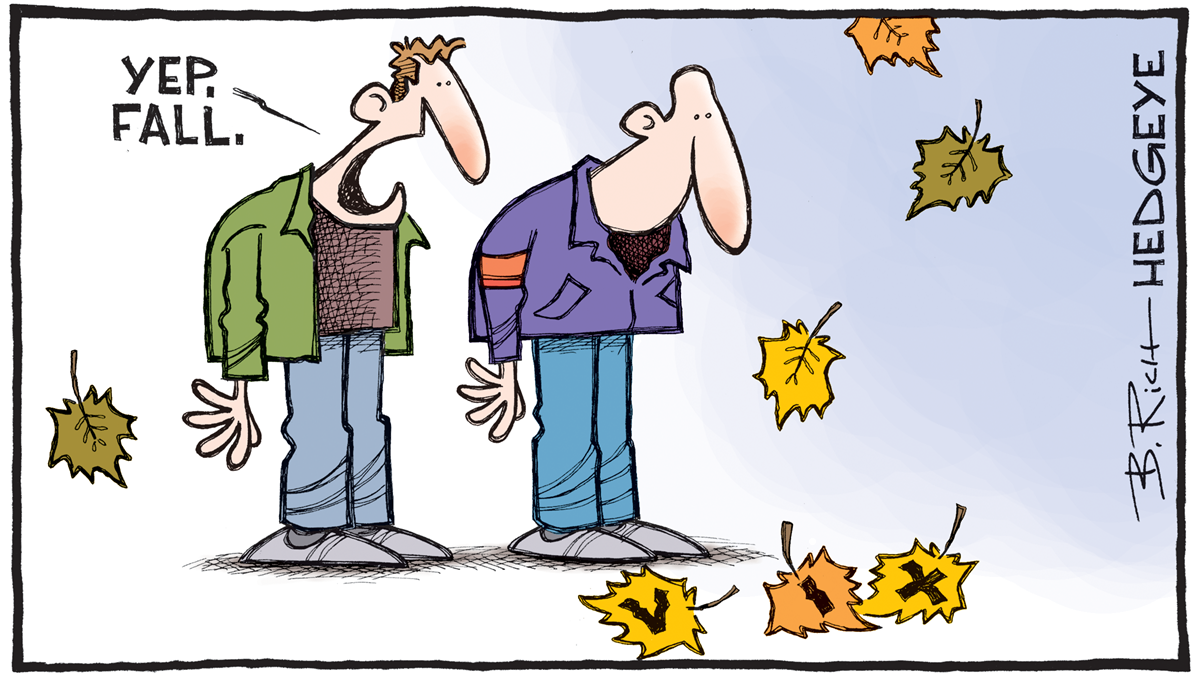
Stock market volatility, as measured by the VIX, is down more
than -30% year-to-date. The market continues to climb its "Wall of Worry," due to low interest rates, low inflation, rising profits and improving economic activity. According to FactSet, the forward 12-month price earnings ratio

is 17.7X for the S&P 500, above the 5 and 10 year averages
but below prior market peaks. Analysts foresee an 8% earnings increase for the coming year. The dividend on the SPX remains about 2%. Global economies are on the rise in China, Europe, Japan and many developing countries.
There is now a 70%+ probability the Feds will raise the  
Federal Funds rate in December. The 10-year Treasury note yield of 2.33%, is just above their yet to be reached inflation target, and provides little room for a
policy error or an inflation spike. Bonds appear to be less attractive than stocks at these levels. Economists see few signs of recession in the cards for the next 12 months. Tight bond credit spreads and a positive yield curve continue to support 2% GDP growth even without fiscal stimulus.We still expect a tax reduction package late this year or early next which will improve earnings prospects and repatriate overseas corporate cash to the U.S.
We continue to monitor signs of change in either interest rate or
fiscal policies that may upset this "steady as she goes" apple cart.
Of course, a 5% correction which has not occurred for over a
year is possible at any time.
Communication is for informational purposes only & doesn't constitute offer to sell or a solicitation of an offer to purchase any interest in any investment vehicles managed by CFA or an associated person or entity. CFA does not accept any responsibility or liability arising from the use of this communication. No representation is being made that the information presented is accurate, current, or complete, and such information is always subject to change without notice. We do not provide legal, accounting or tax advice. Any statement regarding legal, accounting or tax matters was written about the explanation of the matters described herein & not intended or written to be relied upon by any person as definitive advice. Any discussion of U.S. tax matters contained within this communication is not intended to be used and cannot be used for avoiding penalties that may be imposed under applicable Federal, state or local tax law or recommending to another party any transaction or matter addressed.
Friday, September 1, 2017

September 2017

The S&P 500 managed a small gain in August while U.S. 10-year Treasury bonds traded at a yield slightly lower than the dividend yield on that index. The Barclay's AGG advanced 3.6 % with the 10 year US Treasury finishing with a yield of 2.12 %.
Sentiment on stocks continues to be well below bullish levels reached in March. Unemployment held steady at 4.4%, wages rose modestly, inflation is below the 2% target set by the FED. Q2 GDP came in at 3 %.
The tragedy of Hurricane Harvey will likely cause a dip in Q3 GDP and may cause the Fed to pass on a December rate hike while proceeding more slowly with reducing its huge balance sheet.
Tax cut proposals are expected to be unveiled in coming weeks by the Administration. Lower corporate and individual tax rates would boost earnings estimates for 2018.
A weak U.S. dollar in 2017 has helped boost profits of multi- nationals more than domestic companies The Russell 2000 has rallied 4.4% year to date. Returns on non-U.S. stocks in both the developed and emerging markets exceeded U.S. returns for the first time in many years. Gold's rise bested that of the S&P 500's + 11.9 % year to date.
The global economy is in a cyclical, synchronized upswing. Corporate earnings in the U.S. are expected to grow by 10 % in the coming year, in the Euro area by low to mid-teens and in Japan by high teens.
Despite numerous negative news stories ranging from civil unrest to North Korean aggression, the stock market continues to climb a wall of worry.
 Q2 2017 earnings rose 10.2% on revenue growth of 5.1% according to Factset. Forward P/E ratio on the SPX is 17.6 X versus 15.4 X the five-year average.
Bull markets do not die of old age. Imminent recessions and the end of a credit cycle coupled with too much leverage in the financial system stop bull runs. These dampeners often accompany an inverted yield curve or an exogenous shock to the system.
With the current combination of slow but steady growth, low inflation, low interest rates and subdued investor sentiment we anticipate clear sailing for the balance of 2017.
 Low bond yields support high stock prices. If rates begin to rise due to growth in the economy, as may soon be the case, stocks often continue their rise for some time.
While we have yet to see the effects of the FED reducing its balance sheet, by selling mortgage and treasury bonds we can only deduce that it will contribute to a rising rate climate.
Of course, we have not experienced a 5% or more retracement in stocks since the November, 2014 - February, 2015 period, so we would not be surprised if a short, sharp drop happens at any time.
Have a good Labor Day weekend!
This communication doesn't constitute offer to sell or a solicitation of an offer to purchase any interest in any investment vehicles managed by CFA or an associated person or entity. CFA does not accept any responsibility or liability arising from the use of this communication. No representation is being made that the information presented is accurate, current, or complete, and such information is always subject to change without notice. We do not provide legal, accounting or tax advice. Any statement regarding legal, accounting or tax matters was written about the explanation of the matters described herein & not intended or written to be relied upon by any person as definitive advice. Any discussion of U.S. tax matters contained within this communication is not intended to be used and cannot be used for avoiding penalties that may be imposed under applicable Federal, state or local tax law or recommending to another party any transaction or matter addressed.


September 2019

Summer Swings We enter the month of September with the S&P 500 at 2926.46 or -3.4% from the all time high of 3027.98,  re...